LLB Full Form, Meaning, Eligibility and Career Scope: Complete Guide

- 01What Does LLB Stand For?
- 02Types of LLB Programs: What Ishan Institute of Law Offers
- 03LLB Course Duration Explained: 3-Year vs 5-Year Integrated Program
- 04LLB Eligibility Criteria and Admission Process
- 05The eligibility criteria for both LL.B. and B.A. LL.B. at Ishan Institute of Law are
- 06Entrance Exams for LLB Admission in India: The General Picture
- 07The commonly used law entrance examinations include
- 08Curriculum and Practical Legal Training at Ishan
- 09The curriculum provides students with a strong foundation across important areas of law, including
- 10LLB Fees and Scholarships
- 11Ishan Institute of Law offers several scholarship routes for eligible students
- 12Career Scope, Salary and Placements After LLB
- 13Fresh graduates may begin their careers as
- 14With experience, professionals may progress to roles such as
- 15According to the Institute’s placement information, key highlights include
- 16What Happens After LLB? Bar Enrolment, AIBE and Higher Studies
- 17Why Choose Ishan Institute of Law for Your LLB?
- 18Frequently Asked Questions
- 19Key Takeaways
- 20Contact Ishan Institute of Law
- 21To learn more about the program or begin your application, contact Ishan Institute of Law
If you have searched for the “LLB degree full form,” you have probably come across several pages explaining only what LLB stands for. LLB is an abbreviation derived from the Latin term Legum Baccalaureus, commonly translated as Bachelor of Laws. The double “L” represents the plural form of law (Legum), while “B” stands for Baccalaureus (Bachelor).
This guide goes further by explaining the meaning and abbreviation of LL.B., eligibility criteria, admission process, course duration, and career opportunities available after completing a law degree. It also explains the difference between the 3-year LL.B. and 5-year integrated B.A. LL.B. program, whether an entrance examination is required for admission, and the professional opportunities available after graduation.
The guide also provides useful information about the law program, practical legal training, and academic opportunities offered by Ishan Institute of Law, Greater Noida, helping prospective students understand the pathway to legal education and careers.
What Does LLB Stand For?
LLB stands for Legum Baccalaureus, a Latin term commonly translated as Bachelor of Laws. The abbreviation may appear unusual because it comes from Latin rather than English. In Latin, “Legum” is the plural form associated with lex (law), which is why the letter “L” is repeated, while “B” represents Baccalaureus (Bachelor).
In simple terms, LLB means Bachelor of Laws, a professional undergraduate degree covering various branches of law.
The abbreviation is commonly written as
- LLB – commonly used form
- LL.B. – traditional abbreviation using periods
After completing a recognized LL.B. program, graduates who wish to practice as advocates in India must fulfil the applicable State Bar Council enrolment and All India Bar Examination (AIBE) requirements.
Types of LLB Programs: What Ishan Institute of Law Offers
LLB is not a single, fixed course structure. Legal education in India offers different program formats depending on when students begin their legal journey and what they have already studied.
At Ishan Institute of Law, affiliated with Chaudhary Charan Singh (CCS) University, Meerut, students can choose from the following law programs:
- LL.B. (3-Year Program): A 6-semester professional law program designed for students who have already completed a bachelor’s degree in any stream—Science, Commerce, or Arts—and want to add a professional law qualification and build a career in the legal field.
- B.A. LL.B. (5-Year Integrated Program): A 10-semester integrated program for students who have completed Class 12 and want to begin their legal education early. It combines undergraduate studies in Arts with professional legal education in a single five-year program, providing a direct and structured pathway into the legal profession.
- LL.M. (2-Year Postgraduate Program): An advanced postgraduate law program for eligible LL.B. or B.A. LL.B. graduates who want to deepen their legal knowledge, pursue specialization, or explore opportunities in academia, research and other advanced areas of law.
This reflects the broader structure of Indian legal education, where the traditional 3-year LL.B. route for graduates exists alongside 5-year integrated law programs for students entering after Class 12.
Ishan Institute of Law keeps these pathways simple and focused: a 3-year LL.B. for graduates, a 5-year B.A. LL.B. for school leavers, and an LL.M. for law graduates seeking advanced legal education.
LLB Course Duration Explained: 3-Year vs 5-Year Integrated Program
Choosing between a 3-year LL.B. and a 5-year integrated B.A. LL.B. primarily depends on where you are on your academic journey. Both programs lead to professional legal education, but their entry points, duration, and course structure are different.
| Feature | 3-Year LLB | 5-Year Integrated (BA LLB) |
|---|---|---|
| Entry point | After a bachelor's degree | After Class 12 |
| Total duration | 3 years (6 semesters) | 5 years (10 semesters) |
| Best suited for | Graduates changing or adding to their career path | School leavers certain about a legal career early |
| Degree awarded | LLB only | Combined undergraduate degree + LLB |
| Typical age at graduation | Later (post-graduation) | Earlier, since school and law are combined |
Neither program is inherently “better” than the other; the right choice depends on a student’s educational stage and career goals.
A student pursuing a conventional 3-year bachelor’s degree followed by a 3-year LL.B. generally spends six years completing both programs, whereas the 5-year integrated B.A. LL.B. provides a more direct pathway into legal education immediately after Class 12.
For students who already hold a bachelor’s degree, the 3-year LL.B. offers a focused route into law, while students who are certain about pursuing a legal career after school can choose the 5-year integrated B.A. LL.B. to begin their professional legal journey earlier.
LLB Eligibility Criteria and Admission Process
The eligibility criteria for both LL.B. and B.A. LL.B. at Ishan Institute of Law are
- For LL.B. (3-year program): Graduation in any stream (Science, Commerce, or Arts) with a minimum of 45% marks for General category candidates.
- For B.A. LL.B. (5-year integrated program): Pass Class 12 in any stream with a minimum of 45% marks for General category candidates.
- Reserved category relaxation: Minimum 42.8% for OBC candidates and 40% for SC/ST candidates, for both programs.
- No upper age limit for either program, subject to the applicable university and regulatory norms.
- Direct registration with the college/university once the prescribed eligibility criteria are met; no separate mandatory entrance examination is required for admission to these programs at Ishan Institute of Law.
Admission requirements vary across universities and institutions. At Ishan Institute of Law, admission to LL.B. and B.A. LL.B. is based on the prescribed eligibility criteria, without requiring CLAT or another separate entrance examination. Eligible candidates can proceed directly with the Institute's admission and registration process.
LL.M. admission works differently. It requires a recognized 3-year LL.B. or 5-year integrated law degree, and admission is governed by the eligibility, merit and entrance requirements prescribed by Chaudhary Charan Singh University (CCSU), Meerut, for the applicable academic session.
Entrance Exams for LLB Admission in India: The General Picture
Across India, several institutions, particularly National Law Universities and other universities, require candidates to clear an entrance test as part of the admission process. However, the examination required depends on the university and program.
The commonly used law entrance examinations include
- CLAT (Common Law Admission Test): Used for admission to undergraduate and postgraduate law programs at participating National Law Universities.
- AILET (All India Law Entrance Test): Conducted by National Law University Delhi for admission to its law program.
- State-level law entrance examinations: Such as AP LAWCET, TS LAWCET, MH CET Law and Kerala law entrance examinations, depending on the institution and state admission process.
These entrance examinations are a common admission route, but they are not a universal requirement for every law college in India. Admission procedures vary depending on the university, institution, and program.
At Ishan Institute of Law, admission to LL.B. and B.A. LL.B. is based on the prescribed academic eligibility criteria, without requiring CLAT or another separate entrance examination.
Curriculum and Practical Legal Training at Ishan
LLB Curriculum and Specializations
A strong legal education goes beyond understanding statutes and case law—it also develops the ability to analyse legal issues, conduct research, draft effectively, and apply legal principles to real-world situations.
At Ishan Institute of Law, the LL.B. and B.A. LL.B. programs combine academic learning with practical legal exposure to prepare students for the evolving demands of the legal profession.
The curriculum provides students with a strong foundation across important areas of law, including
- Constitutional Law
- Criminal Law
- Civil Law
- Corporate Law
- Family Law
- Public International Law
- Cyber Law and other contemporary legal subjects
These subjects introduce students to diverse areas of legal practice and help them explore career opportunities in litigation, judiciary, corporate law, legal research, compliance, public service, and emerging fields of law.
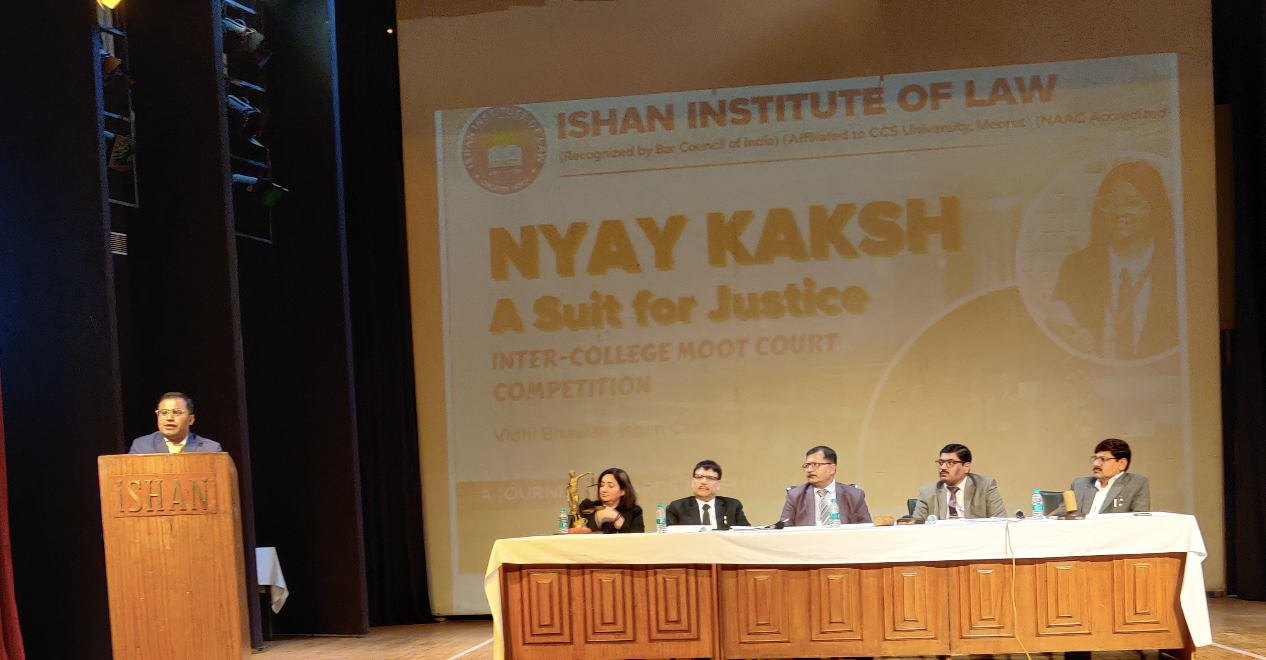
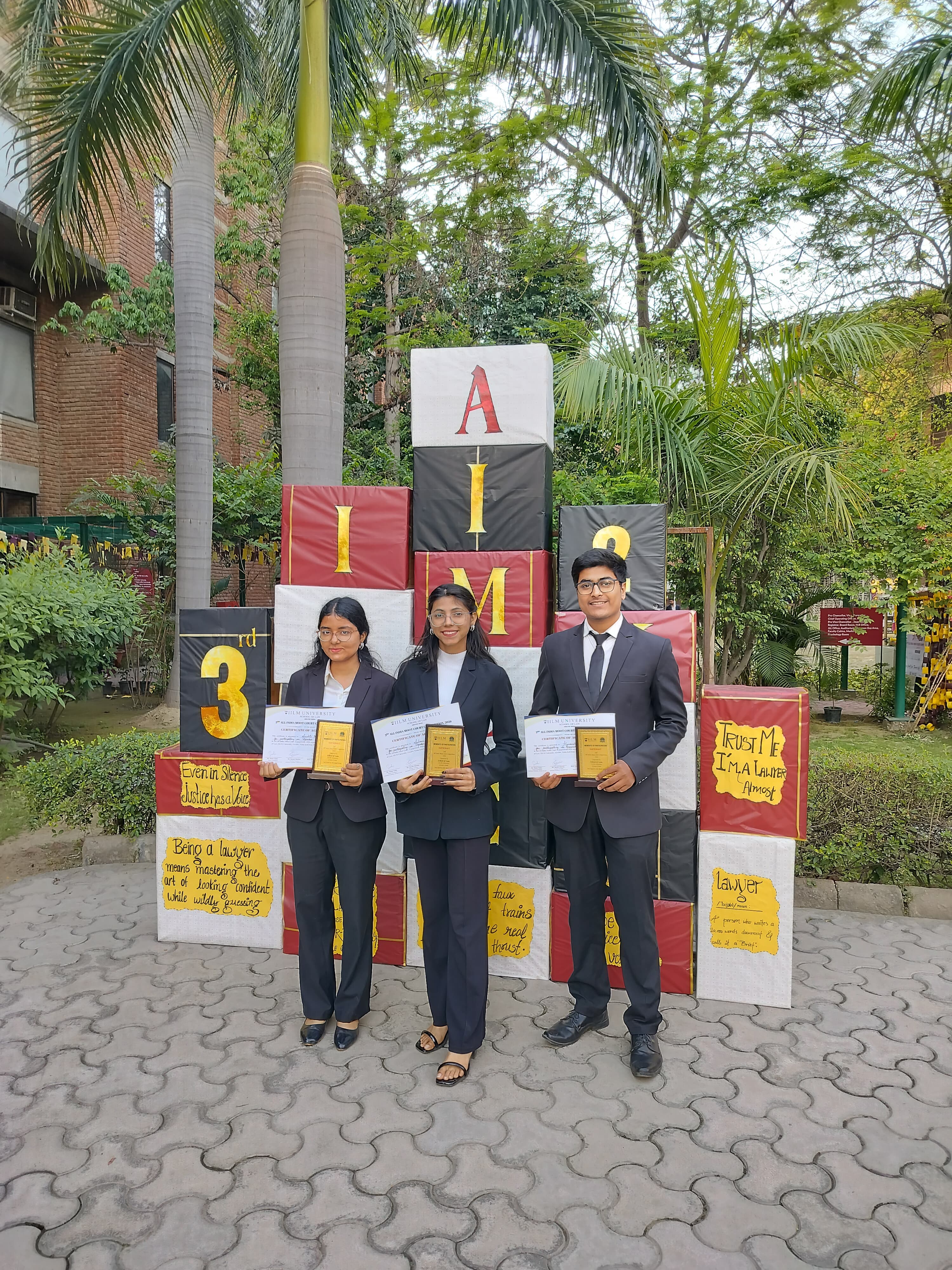
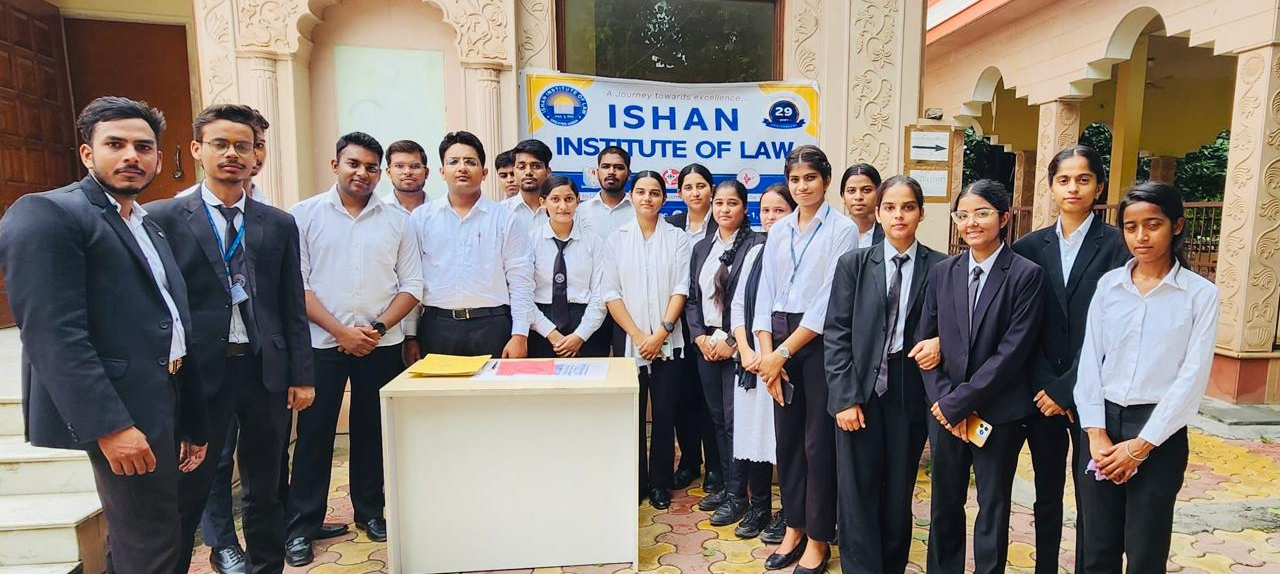
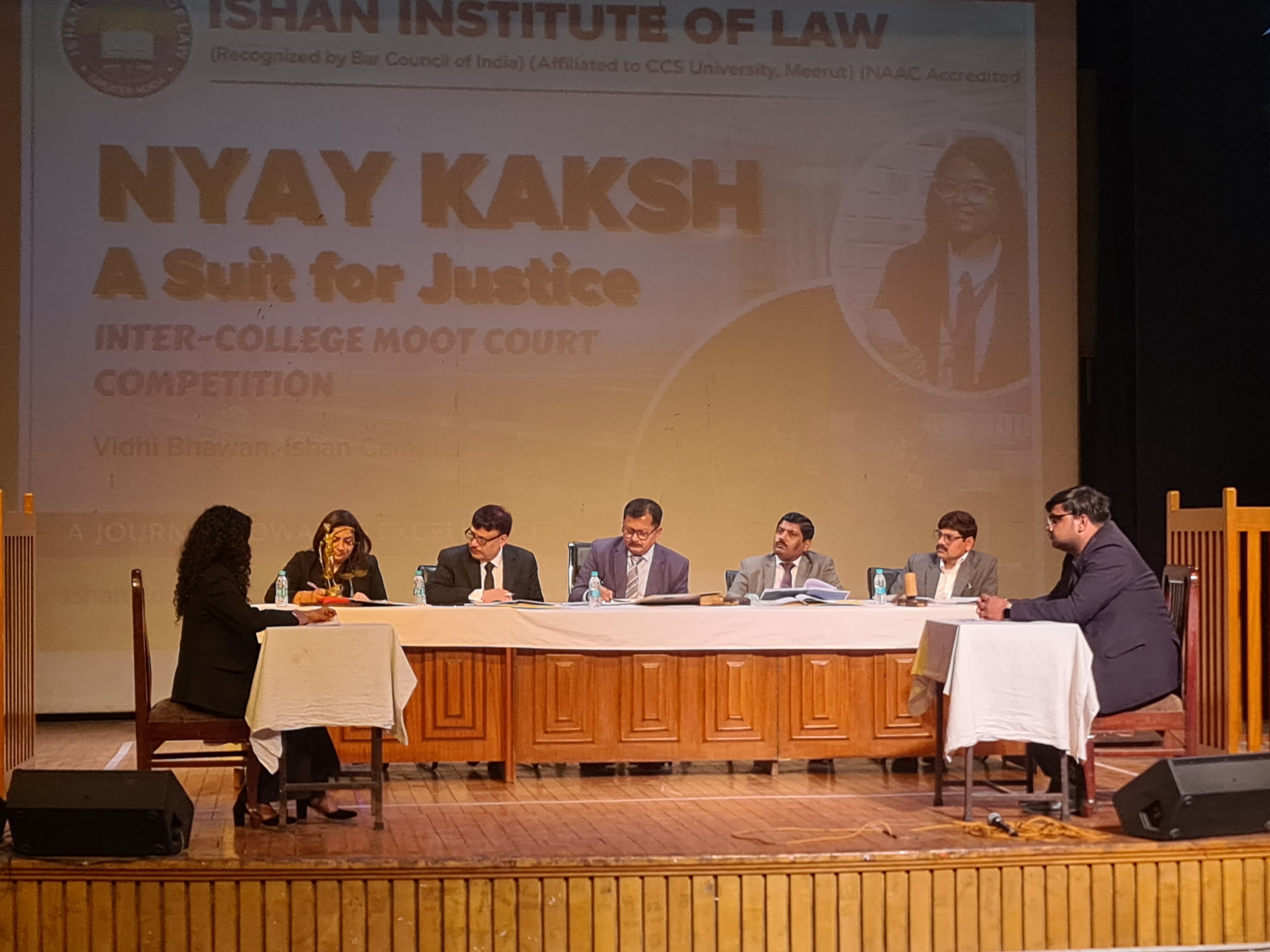
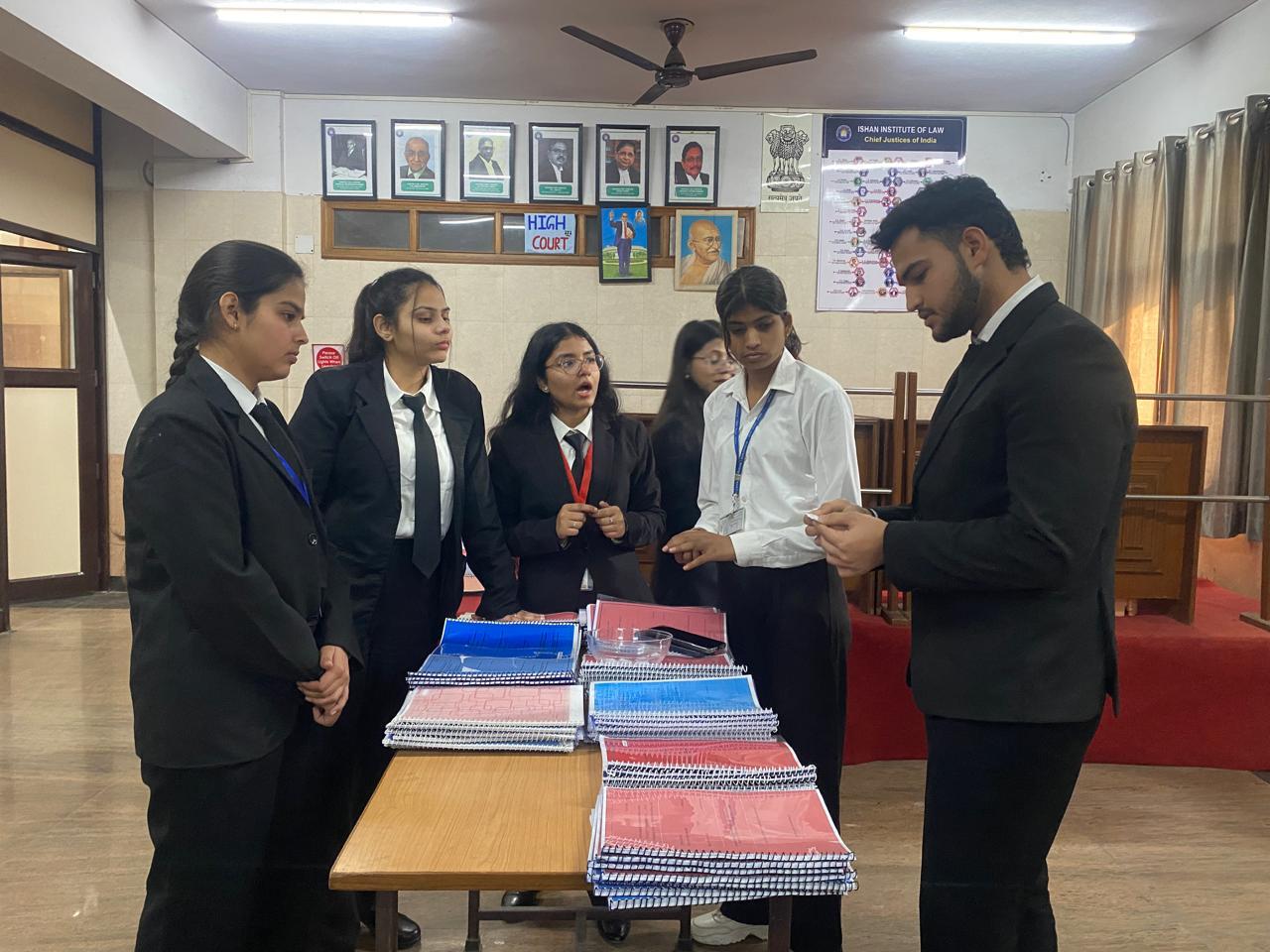
Alongside classroom learning, students gain practical exposure through moot courts, case studies, legal research, court visits, legal aid activities, seminars, workshops, and advocacy-based learning.
This combination of theoretical knowledge and practical training helps students strengthen their legal reasoning, research, communication, drafting, and advocacy skills.
At Ishan Institute of Law, the focus is therefore not only on learning what the law says, but also on developing an understanding of how law is interpreted, argued, and applied in professional practice.
Moot Courts, Court Visits and Legal Aid Camps
Legal education extends beyond textbooks and classroom learning. At Ishan Institute of Law, students gain practical exposure alongside their academic curriculum through activities designed to develop essential legal and professional skills.
- Moot Court Training: Simulated court proceedings that help students develop advocacy, argumentation and presentation skills.
- Court Visits: Exposure to actual court proceedings, legal procedures and professional courtroom practices.
- Legal Aid Camps: Opportunities to participate in legal awareness and community-oriented activities.
- Legal Research & Case Studies: Practical exercises that strengthen research, case analysis and legal reasoning skills.
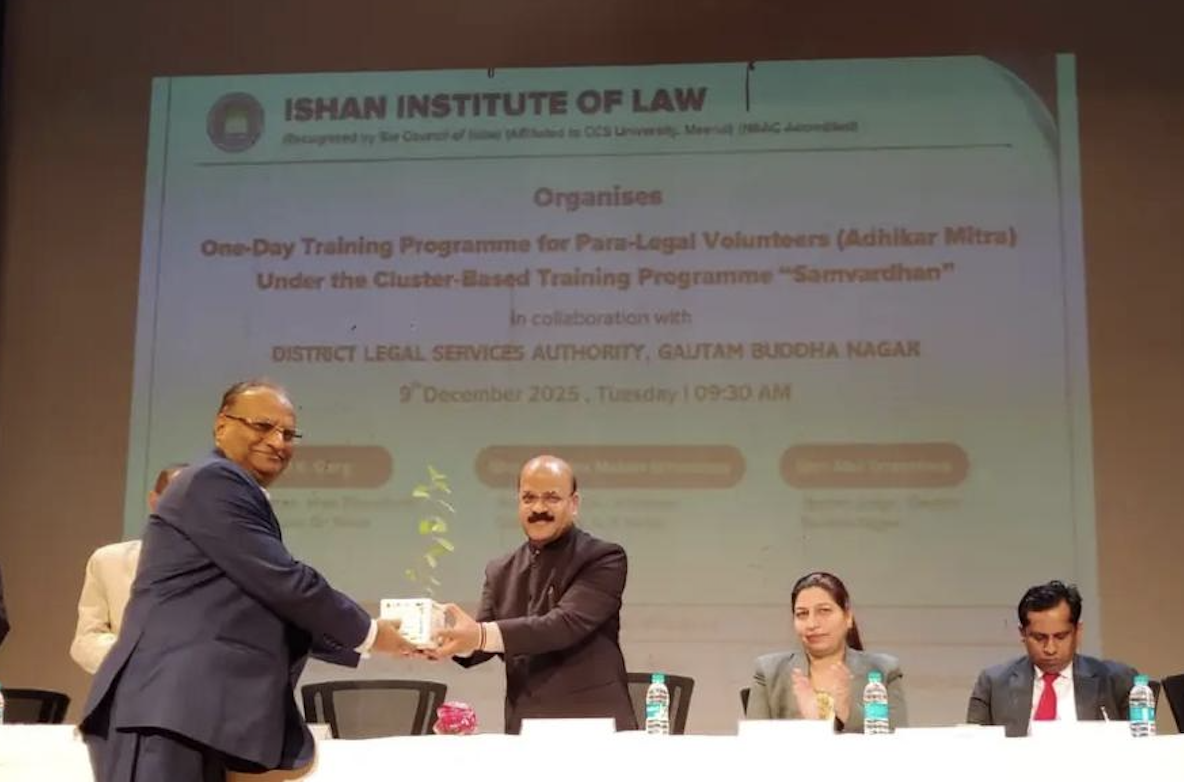
- Seminars & Workshops: Interaction with legal professionals and experts to connect academic concepts with contemporary legal practice.
Through these activities, students can develop practical legal skills, professional confidence, and a better understanding of how law operates beyond the classroom.
LLB Fees and Scholarships
LLB Fees in India: Government vs Private Institutions
Fee structures for law degrees vary widely across India depending on whether an institution is government-run or private:
- Government law colleges: Roughly ₹10,000 to ₹80,000 per year
- Private institutions: Roughly ₹50,000 to ₹5 lakh per year, depending on the institution's reputation, infrastructure, and program type
This spread exists because private institutions often bundle in additional facilities, smaller batch sizes, or brand premium into their fee structure, while government colleges are typically subsidized.
Ishan Institute of Law Fee Structure
| Program | Annual Fee | What's Included |
|---|---|---|
| LL.B. (3-year) | ₹45,000/year | Library, sports, online classes/subscriptions, all-inclusive |
| B.A. LL.B. (5-year integrated) | ₹50,000/year | Library, sports, online classes/subscriptions, all-inclusive |
| LL.M. (2-year) | ₹60,000/year | Library, sports, online classes/subscriptions, all-inclusive |
Because these figures are all-inclusive rather than base tuition with add-ons, they are easier to plan around than fee structures that list a low headline number and then add library, sports, or exam fees separately.
Scholarships Available at Ishan
Ishan Institute of Law offers several scholarship routes for eligible students
- Performance-based scholarships: Up to 100% fee waiver for academic, sports, or co-curricular excellence.
- Sibling scholarship: A 10% fee waiver in the first year for students with a sibling already enrolled.
- Sports achievement scholarship: A 10–80% tuition waiver for students with State or National level sporting achievements.
- Defence personnel children scholarship: A 10% fee concession for children of defence personnel.
Combined with the all-inclusive fee structure above, these scholarships can reduce the effective cost of the program for eligible students.
Career Scope, Salary and Placements After LLB
Career Scope After LLB: Roles, Sectors and Salary
An LLB degree opens up diverse career opportunities across litigation, law firms, corporate legal departments, judiciary, compliance, legal research, public policy and the social sector.
Career growth and earnings can vary significantly depending on the chosen field, experience, specialization, location and employer.
Fresh graduates may begin their careers as
- Junior advocates
- Legal associates
- Legal researchers
- Compliance executives
- Members of corporate legal teams
With experience, professionals may progress to roles such as
- Senior associates
- In-house legal counsel
- Corporate legal advisors
- Compliance managers
- Independent practitioners
Graduates interested in public service can also prepare for judicial services and other competitive examinations, subject to the applicable eligibility requirements.
Emerging areas such as cyber law, data protection, technology law and regulatory compliance are further expanding career opportunities for law graduates.
What Salary Can You Expect After LLB?
There is no fixed salary after an LLB, as earnings depend on experience, specialization, location, employer and career path. The document provides the following indicative ranges:
- Entry-level legal roles: Approximately ₹3–6 LPA
- Junior litigation roles: Around ₹15,000–₹40,000 per month, depending on the chamber, location and experience
- Mid-career legal professionals: Approximately ₹8–15 LPA
- Senior corporate/specialized legal roles: May reach ₹20 LPA or more
- Judicial services: Salaries vary by state, post and applicable government pay structure
Career Outcomes and Placements at Ishan Institute of Law
According to the Institute’s placement information, key highlights include
- 95% placement rate across program
- ₹12 LPA highest package
- ₹5 LPA average package
- 100+ law firms and companies associated with recruitment opportunities
- 7,500+ recorded placements
- 8,000+ alumni across 50+ countries
The Institute also highlights career opportunities and professional connections with organizations and law firms such as Khaitan & Co., Cyril Amarchand Mangaldas, AZB & Partners, HDFC Bank, Cipla, Trilegal, and Aditya Birla Group.
Ishan alumni have pursued diverse professional paths, including roles as advocates, judicial officers, legal counsel, corporate counsel, and other legal professionals.
What Happens After LLB? Bar Enrolment, AIBE and Higher Studies
Completing an LL.B. or B.A. LL.B. is the qualifying step towards legal practice. Graduates who wish to practice as advocates generally need to:
- Enroll with a State Bar Council under the applicable rules.
- Clear the All-India Bar Examination (AIBE) and fulfil the requirements for a Certificate of Practice.
- Optionally pursue an LL.M. for specialization or academic careers or prepare for judicial services examinations.
Graduates can also explore careers in corporate legal roles, compliance, legal research and policy, where the requirements may differ from those practicing advocates.
Why Choose Ishan Institute of Law for Your LLB?
Ishan Institute of Law combines academic learning, practical legal training, transparent fee structure, scholarship opportunities and career-oriented exposure.
Students gain knowledge across key areas such as Constitutional Law, Criminal Law, Corporate Law and Cyber Law, while developing practical skills through moot courts, legal aid activities, legal research, seminars, internships and court visits.
Affiliated with Chaudhary Charan Singh University (CCSU), Meerut, the Institute offers LL.B. and B.A. LL.B. programmes with admission based on prescribed eligibility criteria, without requiring a separate mandatory entrance examination.
The Institute also provides practical learning opportunities and placement support for careers across different areas of the legal profession.
Program and Admission Details
- LL.B. Course: LL.B. Course Page
- B.A. LL.B. & Law Programmes: B.A. LL.B. Programme Page
- Admissions: Admission & Application Form
Frequently Asked Questions
What is the full form of LLB?
LLB stands for Legum Baccalaureus, a Latin term commonly translated as Bachelor of Laws. The double “L” comes from the Latin word Legum, referring to laws.
Is an entrance exam mandatory for LLB admission?
Not always. While institutions such as National Law Universities use entrance examinations like CLAT or AILET, admission procedures vary across institutions.
At Ishan Institute of Law, admission to LL.B. and B.A. LL.B. is based on the prescribed eligibility criteria without a separate mandatory entrance examination.
What is the difference between LLB and BA LLB?
The LL.B. is a 3-year program for graduates, while the B.A. LL.B. is a 5-year integrated program after Class 12, combining Arts and legal education.
What are the eligibility criteria for LLB at Ishan Institute of Law?
For LL.B., candidates must have completed graduation with at least 45% marks for General, 42.8% for OBC and 40% for SC/ST categories.
For B.A. LL.B., the same percentage criteria apply at the Class 12 level.
What is the salary after completing an LLB?
There is no fixed salary after an LLB. Earnings depend on factors such as experience, specialization, location and career path.
Graduates can pursue careers in litigation, law firms, corporate legal departments, compliance, legal research and other legal fields.
What is the salary range after completing an LLB?
Salaries vary widely depending on the career path, experience, specialization, location and employer. Entry-level roles may typically range from ₹3–6 LPA, while experienced professionals in corporate and specialized legal roles may earn significantly more.
At Ishan Institute of Law, placement outcomes vary by program and graduating batch.
Do I need to clear the Bar Exam after LLB to work as a lawyer?
To practice as an advocate in India, law graduates generally need to enroll with a State Bar Council and fulfil the applicable All India Bar Examination (AIBE) requirements.
However, LLB and B.A. LL.B. graduates can also pursue careers in corporate legal departments, compliance, legal research and policy, where the requirements may differ from those practicing advocates.
Key Takeaways
- LLB stands for Legum Baccalaureus, commonly translated as Bachelor of Laws.
- Students can pursue a 3-year LL.B. after graduation or a 5-year integrated B.A. LL.B. after Class 12.
- At Ishan Institute of Law, admission is based on the prescribed eligibility criteria without a separate mandatory entrance examination.
- The Institute combines academic learning with practical exposure through moot courts, court visits and legal aid activities, along with scholarship opportunities and placement support.
Contact Ishan Institute of Law
To learn more about the program or begin your application, contact Ishan Institute of Law
- Mobile: +91-8448797700
- Landline: +91-120-2334400
- Email: [email protected]
- Campus: Ishan Chowk, Knowledge Park-1, Greater Noida, Uttar Pradesh – 201310
- Delhi Office: 120, Hans Bhawan, 1 Bahadur Shah Zafar Marg, ITO, New Delhi – 110002


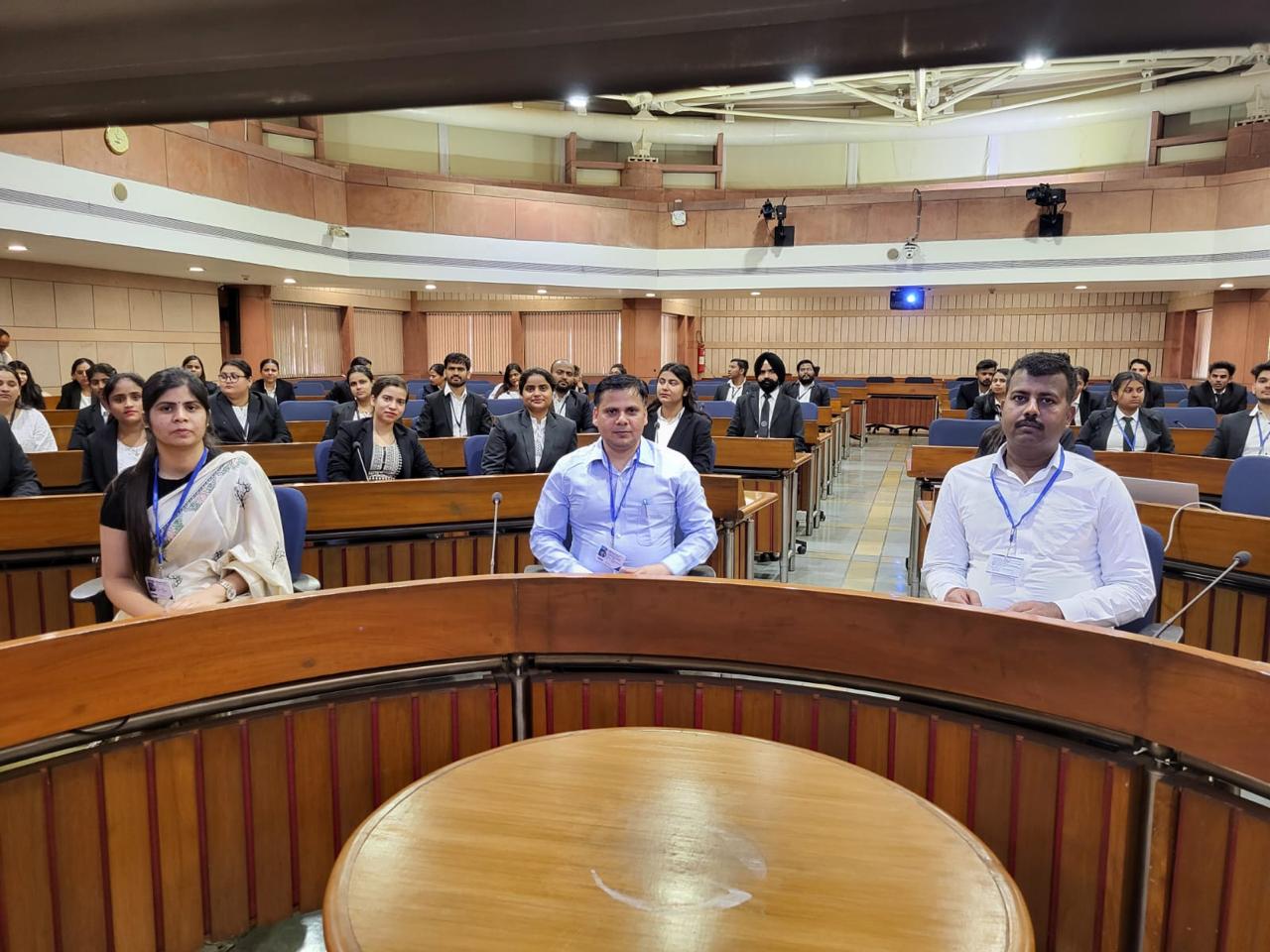
Moments that set the tone for a remarkable journey ahead
Student Interaction
Students connect with peers, faculty and mentors, building meaningful relationships from day one.
Academic Orientation
An introduction to the academic journey ahead. Knowing about all the opportunities and scopes.
Campus Experience
Students got familiar with the Ishan Institute environment. A great campus experience filled with learning and practicality.
New Beginnings
A fresh start filled with learning and opportunities. Explore new things and enjoy your college life.
You May Also Like
More insights, news and campus stories from Ishan Institute of Law, from student achievements to career guidance and events.

BA LLB Full Form, Meaning, Eligibility and Career Scope: Complete Guide

Master of Laws (LLM): Meaning, Eligibility, Specializations and Career Value
Celebrating Events, Achievements & Experiences